Mold After Water Damage in Lapel: The 48 Hour Rule
If your Lapel property took on water in the last day or two, you are inside the window that decides whether this becomes a drying job or a mold remediation job. The 48 hour rule is not marketing language. It is the timeframe published by the EPA and reinforced by IICRC S520 standards: mold spores germinate on wet organic material in roughly 24 to 48 hours when humidity sits above 60 percent and temperatures stay between 60 and 80 degrees Fahrenheit. Most Lapel basements, drywall cavities, and carpet pads land squarely in that range after a leak.
At Lapel Water Restoration, we run this protocol on every Category 1 and Category 2 water loss in Central Indiana. Founded in 2018, BBB A+ rated, IICRC certified, and direct with you about what the moisture readings actually show. If your drywall is at 22 percent moisture content 36 hours after a pipe burst, you have a problem that fans alone will not solve. Below is the exact technical sequence we follow, the numbers we measure against, and the decisions that determine whether materials get dried in place or cut out. Read it before hour 48 expires. If we cannot help, we will tell you directly.
Why 24 to 48 Hours Is the Real Deadline
Mold spores exist everywhere. They are floating through your living room right now, and they are floating through ours too. What turns dormant spores into an active colony is moisture combined with an organic food source, and a typical Lapel home offers an unlimited buffet. Drywall paper, wood framing, carpet backing, insulation, cabinet particleboard, and the dust that settles on every surface all qualify as food. When relative humidity inside a wet structure climbs above 60 percent, which happens within hours of a meaningful water loss, spores germinate. Within 24 hours you can have hyphae forming, the threadlike roots that anchor a colony to the material. By 48 hours those colonies are visible to trained eyes, and by 72 hours they are often visible to anyone walking through the room. By day five or six, you are looking at remediation rather than mitigation, and the cost difference is significant.
The temperature in your home also matters. Mold thrives between roughly 60 and 80 degrees, which describes most Lapel interiors year round. A flooded basement in July, where humidity hangs in the air and the concrete walls stay cool and damp, is essentially a petri dish. A burst pipe in February behind a heated wall is not far behind. We have responded to frozen pipe burst situations where homeowners assumed the cold weather would slow mold growth, only to find active colonies in the wall cavity four days later because the furnace had been running the whole time. The species matter too, though most homeowners never see them named. Common indoor opportunists like Cladosporium, Penicillium, and Aspergillus colonize fast on damp cellulose, while Stachybotrys, the so called black mold that drives most of the headlines, prefers materials that have stayed wet for a week or longer. The longer water sits, the more aggressive the species that move in, and the more involved the cleanup becomes.
What Is Actually Happening Inside Your Walls
The visible water on your floor represents maybe 30 percent of the moisture in a typical loss. The rest has wicked into baseboards, climbed up drywall through capillary action, soaked into the subfloor, and migrated under cabinets and into adjacent rooms. Drywall pulls water vertically at a measurable rate, often six to twelve inches in the first few hours. Insulation behind that drywall holds moisture far longer than the drywall itself, sometimes weeks if left alone. This is why surface drying with a few box fans almost never solves the problem. The fans dry what you can see and leave the colony forming where you cannot. When we arrive with moisture meters and thermal imaging, we routinely find readings of 40 to 80 percent in materials that looked fine to the homeowner. That hidden saturation is where the 48 hour rule actually matters, because by the time mold becomes visible on the surface, it has usually been growing in the cavity for two or three days already. If you suspect anything is happening behind a wall, our guide on hidden leak detection walks through the signs.
There are also smells to pay attention to. A musty, earthy odor that hits you when you walk into a room is volatile organic compounds released by active mold metabolism, and it usually shows up before any visible staining. Pets often react first, sniffing at a baseboard or refusing to lie in a spot they used to favor. Allergy symptoms in the household, especially morning congestion or eyes that water in one specific room, are another early signal. None of these signs are proof on their own, but stacked together they tell a story that a moisture meter can usually confirm in about ten minutes.
The 48 Hour Window Closes Fast: Act Now
Mold growth is a chemistry and biology problem with a clock attached. Once that clock passes 48 hours, your scope of work expands, your cost climbs, and your insurance conversation gets harder. Lapel Water Restoration runs IICRC certified water damage response across Lapel 24 7 with documented moisture readings, antimicrobial protocols, and honest assessments. If your situation is straightforward drying, we will tell you. If it has crossed into remediation territory, we will show you the readings that prove it. Call us before hour 48 expires.
The Cost of Waiting Past 48 Hours
We are going to be direct about pricing because guessing helps nobody. A typical mitigation job in Lapel, addressed within 24 hours, runs roughly 2,500 to 6,500 dollars depending on square footage and category. Wait four or five days and you are usually looking at mold remediation on top, which adds 3,000 to 10,000 dollars or more depending on how far the colonies have spread. Wait two weeks and you are often replacing flooring, drywall, cabinetry, and sometimes framing. Insurance carriers know this timeline too, and most policies expect you to mitigate promptly. Delays can complicate or reduce a claim. The 48 hour rule is not just a biological threshold. It is a financial one, and it is also a health one for anyone in the household with asthma, allergies, or a compromised immune system. The fastest call you make after discovering a loss is almost always the cheapest one you make all year.
What You Should Do in the First 24 Hours
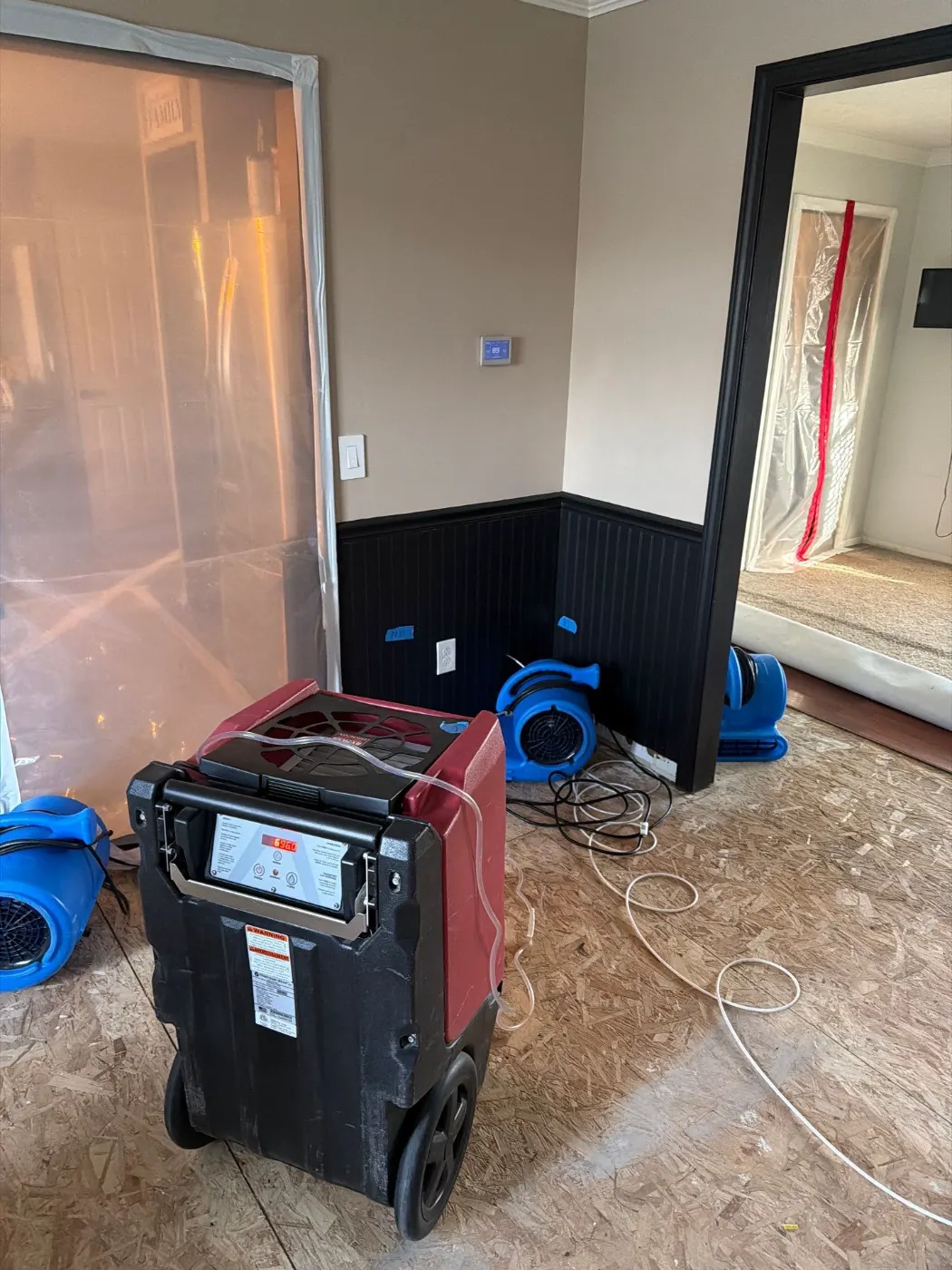
The first day is when you have the most leverage and the lowest cost exposure. Stop the water source if you safely can, whether that means shutting off the main valve or cutting power to a flooded area. Move belongings out of standing water, lift furniture onto blocks or foil if you cannot move it, and pull up area rugs. Do not run the HVAC system if you suspect contamination, because it will spread spores through every duct in the house. Document everything with photos and video before you start moving items, because your insurance adjuster will ask. Call a professional restoration company that can be on site quickly, ideally within a few hours. Lapel Water Restoration dispatches IICRC certified technicians across central Indiana with a target arrival window of within 2 hours for emergencies, and we bring commercial extraction, air movers, and dehumidifiers rated for the actual cubic footage of your loss. A wet vac from the hardware store cannot pull water from a saturated subfloor, and a household dehumidifier cannot lower the humidity of a flooded basement fast enough to matter.
If the water was clean, from a supply line or rainwater intrusion, you are in Category 1 territory and prompt drying can often save most materials. If it came from a dishwasher, washing machine, or a long standing leak, you are likely in Category 2, sometimes called grey water, and porous materials may need to come out. If it came from a sewage backup, toilet overflow, or groundwater flooding, that is Category 3 and the rules change completely. You can read more about how the categories work in our breakdown of water damage categories, but the short version is that higher categories mean more aggressive demolition and faster mold risk because the contamination feeds growth.
Frequently Asked Questions
How quickly does mold actually start growing after a leak?
Mold spores can begin activating within 24 hours of contact with water, and visible growth typically appears between 48 and 72 hours. In humid Lapel basements, growth can show even faster.
Can I stop mold myself if I dry everything within 48 hours?
You can slow surface growth, but porous materials like drywall and subfloor often retain moisture you cannot detect without meters. Lapel Water Restoration uses thermal imaging and moisture sensors to verify materials are fully dry.
Will my insurance still cover mold after water damage?
Most policies cover mold caused by a sudden, covered water loss if you act quickly. Delayed response can void coverage, which is why Lapel homeowners should document everything and call a certified firm within the first 24 hours.
What does mold remediation cost compared to water mitigation?
Standard mitigation runs $1,500 to $5,000 in the Lapel area. Once mold develops, remediation can push the total past $10,000 because containment, demolition, and air quality testing are required.
How does Lapel Water Restoration confirm mold is fully removed?
We follow IICRC S520 standards with containment, HEPA filtration, antimicrobial treatment, and post-remediation verification. For larger losses, we coordinate independent air quality testing before clearing the project.
Have a restoration question?
Our IICRC certified Lapel crew is ready to help. Free assessments, estimate based on what we can sees, no pressure.